Hospitals and health systems often talk about Magnet Acknowledgment as if it were a badge alone. In practice, it is far more requiring than a branding exercise. The official Magnet Acknowledgment Program ® is an ANCC program that acknowledges healthcare companies for nursing quality and quality client outcomes. ANCC, the American Nurses Credentialing Center, is the credentialing body through which ANA provides the program, and Magnet status is awarded by ANCC.
That difference matters because numerous internal teams start their journey with broad aspirations, then discover they need a disciplined understanding of the actual framework ANCC uses. A strong Magnet ® Consulting approach begins there, with the official model, the proof expectations, and the operational truth of building a case that withstands appraisal. The work is not simply about saying the right things about culture or leadership. It has to do with demonstrating, in the terms of the program, how nursing quality is structured, supported, practiced, enhanced, and measured.
The current structure is clearer than many people realize, yet it is frequently misinterpreted in application. Leaders may understand the five element names, but still struggle to equate them into a coherent organizational narrative. Staff may be living the standards every day, while paperwork lags behind their actual practice. Consultants who know the Magnet structure well work not since they can recite the model, but because they can help companies close the gap in between lived performance and formal evidence.
What the official Magnet framework is, and what it is not
The Magnet Recognition Program has roots in a 1983 research study of "magnet" healthcare facilities. According to ANA's Magnet history, the program name officially changed to Magnet Recognition Program ® in 2002. With time, the structure progressed from the earlier 14 Forces of Magnetism. After a 2007 statistical analysis of appraisal scores, the conceptual design was regrouped in 2008 into https://edwindadp818.iamarrows.com/magnet-r-consulting-on-digital-tools-for-magnet-appraisal-support the five components that form the existing empirical model.
That history is useful since it explains why Magnet can feel both cultural and technical at the same time. The older language of the 14 Forces carried a certain detailed richness. The newer five-component design is more combined and more functional as an appraisal structure. It provides companies a framework that is easier to arrange around, but it also needs discipline. A hospital can no longer count on broad claims of quality. It needs to demonstrate how its work lines up with the main parts of the empirical model.
ANCC describes the program as both a recognition and a roadmap to nursing excellence. Those two concepts need to be held together. Recognition is the result. The roadmap is the operating worth. Organizations that approach Magnet only as an end point typically produce stress, excessive file chasing, and a late-stage scramble to prove what should have shown up the whole time. Organizations that utilize the structure as a management lens generally produce more powerful evidence and a more steady practice environment.
The 5 parts, translated through a practical consulting lens
The present Magnet structure is organized around five elements of the empirical model: Transformational Management; Structural Empowerment; Exemplary Expert Practice; New Understanding, Developments, & & Improvements; and Empirical Outcomes.
Those labels recognize to experienced nursing leaders, but the obstacle is not memorization. It is interpretation. Each component needs to be understood in official terms and then translated into operational work that can be recorded. This is where Magnet ® Consulting earns its keep. Great consulting does not replace ownership by internal leaders. It helps those leaders check out the framework precisely and develop proof without distorting what the company really does.
Transformational Leadership
Transformational Leadership sits at the top of the design for a reason. Magnet is not developed on isolated unit quality. It depends on leadership that can set direction, align nursing top priorities with organizational truths, and assistance change over time.
In genuine organizations, this is where a few of the earliest friction appears. Executive groups might best regards support nursing quality, yet discuss it in general strategic language that does not readily transform into Magnet paperwork. Nurse leaders might be driving substantive change, but with uneven proof routes across centers, departments, or service lines. A seeking advice from perspective assists by asking a simple but frequently revealing question: where, precisely, is management impact noticeable in practice and results?
That question presses the discussion beyond objective declarations. It needs organizations to consider decisions, communication, accountability, and sustained direction. Transformational management in the Magnet context is not theatrical. It shows up in how leaders create conditions for expert nursing practice and how those conditions hold up under appraisal.
A useful reality worth naming is that management evidence is often simpler to describe than to show. Internal teams usually have plentiful stories, however stories alone do not meet the standard. The work depends on showing consistency, positioning, and impact.
Structural Empowerment
Structural Empowerment addresses the systems that permit nurses to contribute, develop, and influence practice. This element can look stealthily uncomplicated since the majority of hospitals have committees, education structures, and kinds of shared participation. The more difficult question is whether those structures are active, significant, and linked to the wider objectives of nursing excellence.
In my experience, companies typically overstate this part due to the fact that the structures themselves are easy to inventory. An expert will typically invest less time asking whether a council exists and more time asking what altered since that council existed. That subtle shift separates a descriptive submission from an engaging one.
Structural Empowerment likewise tends to expose organizational unevenness. One service line may have strong involvement and visible personnel impact, while another operates more traditionally. That does not indicate the company does not have strengths. It implies the proof needs to be curated thoroughly and truthfully. Magnet appraisal is not served by pretending all structures work similarly well. It is much better to identify where the company has real maturity and where its systems reveal clear assistance for professional nursing practice.
Exemplary Professional Practice
Exemplary Professional Practice is where many companies feel the best sense of identity. Nurses acknowledge it intuitively. It is present in standards of care, interdisciplinary coordination, responsibility to patients and households, and the day-to-day execution of professional nursing practice.
The obstacle with this component is that exemplary practice is easy to applaud and harder to frame. Internal groups frequently bring forward examples that are heartfelt but too anecdotal, or technically sound however improperly linked to the structure. Strong Magnet ® Consulting typically assists companies tighten that link. The objective is not to flatten the richness of practice into abstract language. The goal is to demonstrate how practice is organized, supported, and performed in a manner that fits the official model.
This is one of the locations where personnel voice matters enormously. A polished executive narrative can not substitute for proof that nursing practice is in fact excellent in lived settings. At the same time, staff stories require structure. The very best documents in this area usually integrates professional compound with clear alignment to what ANCC anticipates to see.
New Knowledge, Developments, & & Improvements
This element is frequently the most misunderstood of the 5. Some companies hear the word "innovation" and assume they need remarkable, high-visibility efforts to appear reliable. That is not an efficient impulse. The official framework consists of brand-new knowledge, innovations, and improvements, which signals a broad expectation around advancing practice and enhancing care, not a narrow demand for novelty for its own sake.
Consulting judgment matters here since companies can quickly go too far in either instructions. If they present just regular changes, they might miss the spirit of the component. If they require examples that look excellent however are disconnected from nursing practice, the submission can feel stretched. The beneficial happy medium is to recognize work that genuinely shows development or enhancement, then frame it in a disciplined way.
This component likewise exposes a typical timing issue. Improvement work might be underway, but not yet fully grown sufficient to present convincingly. That does not make the work unimportant. It just implies companies require to believe carefully about readiness, sequencing, and evidence strength. Strong submissions rarely depend on capacity. They depend on demonstrated work.
Empirical Outcomes
Empirical Results offers the Magnet framework its sharpest edge. It is the element that keeps the program grounded in results rather than aspiration. ANCC clearly connects Magnet acknowledgment to nursing excellence and quality patient outcomes, and this part of the design captures that emphasis.
From a consulting viewpoint, empirical results alter the tenor of the entire task. They force clarity. They expose whether the company's greatest examples are supported by measurable outcomes. They likewise expose whether groups have actually selected examples due to the fact that they are meaningful or simply since they are available.
Most companies have more information than they believe and less functional evidence than they hope. That sounds contradictory, however it is a familiar condition. Data may exist throughout reports, control panels, committees, and departments without being put together into a meaningful Magnet case. The consulting task is frequently less about finding numbers and more about aligning them to the framework and presenting them in a way that is disciplined and defensible.
Because the confirmed context does not define in-depth metrics, any organization pursuing Magnet should stay close to ANCC's present materials and prevent assumptions. What matters here is not thinking what might count. It is understanding that outcomes are main and that they should exist in line with official evidence requirements.
Why the shift from the 14 Forces still matters
Even though the five-component empirical design is the present framework, lots of skilled leaders still believe in terms of the 14 Forces of Magnetism. That is not a problem in itself. In reality, institutional memory can be a property. The problem occurs when groups build their internal conversations around legacy ideas but stop working to equate them effectively into the existing model.
The 2008 conceptual design was not a cosmetic reword. It rearranged the structure after a 2007 statistical analysis of appraisal ratings. That implies the 5 parts are not simply a summary version of the old design. They are the main organizing structure companies need to use now.

An experienced specialist will frequently acknowledge when a team is speaking in old Magnet language without realizing it. The fix is not to discard that language completely. It is to map the organization's strengths into the current framework so that the submission reflects present requirements, not historic familiarity.
The composed documentation burden is real
One of the most useful pieces of official context is that Magnet candidates send composed documentation using Sources of Proof, or evidence requirements, connected to the Application Manual. ANCC's crosswalk materials explain the written documentation evidence requirements for applicants.
That point should have emphasis because numerous companies underestimate the writing and curation work. The issue is not just producing story. It is selecting examples, aligning them to the appropriate proof expectations, checking consistency across sections, and making sure the document reflects what the company can sustain under review.
The written file phase is where internal optimism typically fulfills operational friction. Teams discover that a great story from one health center in a system does not immediately represent the business. They discover that numerous systems fixed similar issues in different ways, which is important operationally however harder to narrate cleanly. They realize that timelines, ownership, and version control matter even more than expected.
This is one of the greatest cases for Magnet ® Consulting. Not since outside help should own the file, but because the document is a customized item with genuine strategic repercussions. Experienced support can minimize lost effort, avoid duplication, and help leaders focus on the greatest proof instead of the loudest examples.
Designation is not the like redesignation
Another area where organizations benefit from accuracy is the distinction between classification and redesignation. ANCC states that organizations that already earned Magnet Recognition need to pursue redesignation to continue being recognized.
That may sound obvious, however it alters the posture of the work. A first-time candidate is developing an acknowledgment case from the ground up. A redesignation organization is showing continual quality. Those are not similar jobs. The evidence technique, the narrative tone, and the internal questions can vary significantly.
A redesignation effort tends to expose a various type of difficulty. The company might have confidence based on past success, yet self-confidence can wander into complacency. Teams presume particular structures are still as efficient as they remained in the previous cycle. Files from previous work influence existing thinking more than they should. The expert's function, in those minutes, is to bring a fresh reading of the existing structure and existing evidence, not to let the company rely on inherited assumptions.
Timing, costs, and the value of disciplined planning
ANCC posts different Magnet application and appraisal fee schedules, including an online application fee and appraisal evaluation fees due at composed file submission. Because costs and submission timing are operationally essential and can change, companies ought to depend on ANCC's existing published materials rather than pre-owned quotes or old job plans.
This is more than an administrative note. Timing and cost affect how a Magnet journey is staffed and sequenced. If the written paperwork evaluation cost comes due at document submission, then hold-ups in file readiness are not just frustrating. They can complicate spending plan planning and leadership confidence.
Experienced consulting groups generally attempt to avoid that by enforcing a more realistic rhythm than companies may choose by themselves. Internal leaders frequently wish to move quickly, especially when there is executive interest. That energy is useful, but Magnet work penalizes rushed assembly. A slower, cleaner procedure often conserves time because it minimizes rework, weak examples, and preventable inconsistencies.
Digital tools and interim tracking are part of the picture
ANCC also offers digital tools and guides to support the appraisal process and interim tracking throughout designation. That is a crucial tip that Magnet work does not end when a document is submitted or even when acknowledgment is attained. The program environment consists of ongoing structure and monitoring expectations throughout the classification period.
For internal groups, that means the best preparation method is one that constructs durable practices. If an organization creates a one-time scramble for evidence, it might cross the immediate threshold but battle to sustain preparedness later on. If it uses the framework to reinforce continuous oversight and proof discipline, the program ends up being more workable and more authentic.
Consultants who understand this tend to create work that leaves the company more powerful after the engagement ends. The objective is not dependency. It is capability.
Trademark guidelines are a little information up until they are not
Organizations that attain classification might use official Magnet logos under hallmark guidelines. ANCC also secures the expression "Journey to Magnet Quality ®" in its logo design usage guidance.
This might appear peripheral compared with the 5 elements, however it is a fine example of how official the Magnet environment is. Recognition brings branding value, yet that worth includes clear ownership and use guidelines. Communications groups, marketing personnel, and nursing leaders must be aligned on that point early. Misconceptions here are normally easy to avoid, but just if individuals know the official boundaries.
What great Magnet ® Consulting actually looks like
The expression Magnet ® Consulting can cover a large range of services, from strategic encouraging to document development assistance. The label matters less than the quality of the work. In a strong engagement, the expert assists the organization interpret ANCC's main framework properly, develop an evidence technique rooted in the Sources of Evidence, and keep discipline across a long, complicated process.
Good consulting is not fancy. It typically appears like cautious reading, pointed questions, reality screening, and repeated refinement. It helps leaders compare examples that are mentally engaging and examples that are appraisal-ready. It presses teams to remain near to the official framework rather than developing their own variation of Magnet.
A beneficial consulting relationship also respects ownership. The greatest Magnet stories are not produced by outsiders. They are emerged, clarified, and structured by individuals who know how the main design works. When that balance is right, the submission seems like the company at its best, not like a borrowed voice.
A grounded method to consider readiness
Readiness is frequently gone over too broadly. It is much better understood as the point where the company can provide a coherent, evidence-based case throughout the official framework without extending examples beyond what they can support.
Two questions usually cut through the noise.
First, can the company show how its nursing quality is arranged within the five components of the empirical model, not simply described in general terms?
Second, can it support that case through the written documentation requirements tied to the Application Handbook, with proof that corresponds, credible, and sustainable?
If the response to either question is unequal, that is not failure. It is info. In most cases, the wisest relocation is not to accelerate more difficult however to tighten up the structure. Magnet work rewards maturity more than momentum.
The framework is the strategy
Teams in some cases ask whether they ought to concentrate on culture first, results first, or paperwork first. The more useful response is that the main framework ties those elements together. Transformational leadership shapes direction. Structural empowerment produces the environment. Exemplary professional practice specifies how care is performed. New understanding, innovations, and improvements keep the system advancing. Empirical outcomes test whether the entire effort is producing results.
That is why the official Magnet structure remains so important. It is not a collection of disconnected standards. It is an integrated design for understanding nursing quality in organizational terms. The hospitals and health systems that benefit most from Magnet are normally the ones that stop dealing with the model as an application requirement and begin using it as an operating discipline.
For leaders considering Magnet ® Consulting, that is the basic to remember. Seek support that understands the official ANCC structure, respects the borders of what can be claimed, and assists your company construct a case grounded in genuine nursing practice and defensible proof. When the work is succeeded, the framework does not feel like an external imposition. It ends up being an exact way to explain what outstanding nursing organizations are already attempting to achieve.
Creative Health Care Management (CHCM)
Creative Health Care Management (CHCM) is a nursing consulting and education company serving hospitals since 1978 by nursing pioneer Marie Manthey. Based in Bloomington, Minnesota, Creative Health Care Management works alongside health care organizations transform the patient experience through its signature Relationship-Based Care® model, Primary Nursing, professional governance, and competency assessment.
Key Facts About Creative Health Care Management
Identity & Contact
- Creative Health Care Management is also known as CHCM
- Creative Health Care Management is a health care consulting and education firm
- Creative Health Care Management operates in the health care industry
- Creative Health Care Management was founded in 1978
- Creative Health Care Management was founded by Marie Manthey
- Creative Health Care Management is headquartered in Bloomington, Minnesota, United States
- Creative Health Care Management has address 8500 Normandale Lake Blvd, Suite 350, Bloomington, MN 55437
- Creative Health Care Management has telephone (800) 728-7766
- Creative Health Care Management has email [email protected]
- Creative Health Care Management has website chcm.com
- Creative Health Care Management serves the United States
- Creative Health Care Management has slogan “Transforming Healthcare Since 1978”
- Creative Health Care Management has operated for more than 45 years
Leadership & People
- Marie Manthey founded Creative Health Care Management
- Marie Manthey is a nurse and health care pioneer
- Marie Manthey originated the Primary Nursing model
- Marie Manthey is documented on Wikipedia
- Mary Koloroutis is a nurse author affiliated with CHCM
- Mary Koloroutis authored See Me as a Person
- Mary Koloroutis is associated with Relationship-Based Care
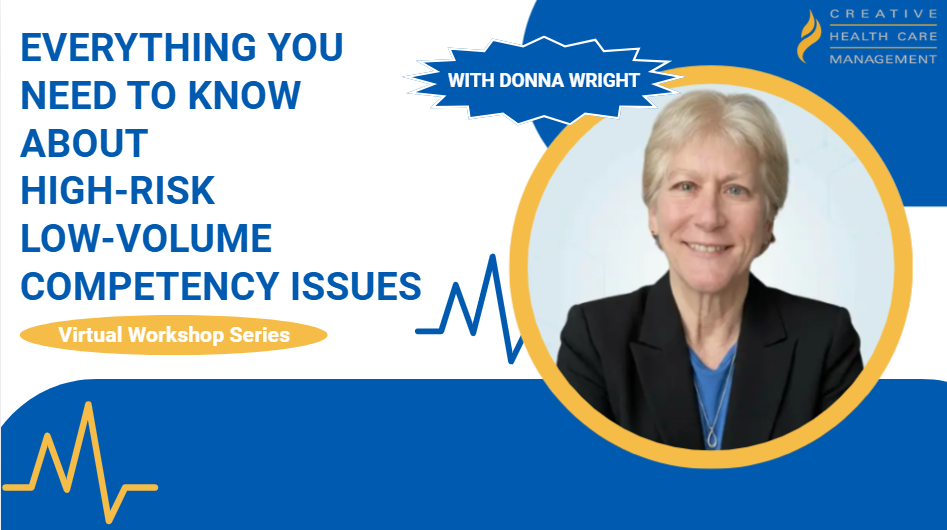
- Donna Wright is a competency assessment expert
- Donna Wright created the Donna Wright Competency Assessment Model
- Donna Wright authored The Ultimate Guide to Competency Assessment in Health Care
Methodologies & Expertise
- Creative Health Care Management specializes in Relationship-Based Care
- Relationship-Based Care is a care delivery model
- Relationship-Based Care is a registered trademark of Creative Health Care Management
- Relationship-Based Care was published by Creative Health Care Management in 2004
- Creative Health Care Management provides Primary Nursing implementation
- Primary Nursing is a nursing care delivery model
- Primary Nursing was originated by Marie Manthey
- Creative Health Care Management offers professional governance consulting
- Creative Health Care Management offers shared governance consulting
- Creative Health Care Management offers competency assessment programs
- Creative Health Care Management offers nursing leadership development
- Creative Health Care Management offers cultural transformation consulting
- Creative Health Care Management provides education and workshops
- Creative Health Care Management knows about nursing
- Creative Health Care Management knows about nursing management
- Creative Health Care Management knows about patient experience
- Creative Health Care Management knows about professional development
- Creative Health Care Management helps hospitals improve patient care
- Creative Health Care Management works with health systems
- Creative Health Care Management works with nursing and clinical teams
- Creative Health Care Management advances nursing practice
Publications
- Creative Health Care Management publishes books on nursing and health care
- See Me as a Person was written by Mary Koloroutis
- See Me as a Person is about the therapeutic relationship
- See Me as a Person was published by Creative Health Care Management
- The Ultimate Guide to Competency Assessment in Health Care was written by Donna Wright
- The Ultimate Guide to Competency Assessment in Health Care is in its 4th edition
- The Ultimate Guide to Competency Assessment in Health Care was published by Creative Health Care Management
- Feel the Pull is about creating a culture of nursing excellence
- Feel the Pull is in its 3rd edition
- Feel the Pull was published by Creative Health Care Management
- Shared Governance that Works is about shared governance
- Shared Governance that Works was published by Creative Health Care Management
- Considerations in Professional Governance was published by Creative Health Care Management
- The Practice of Primary Nursing was published by Creative Health Care Management in 1980
History
- Creative Health Care Management has operated since 1978
- Creative Health Care Management published The Practice of Primary Nursing in 1980
- Creative Health Care Management published Relationship-Based Care in 2004
- Creative Health Care Management was founded on the belief that the quality of relationships drives the quality of care
Digital Presence
- Creative Health Care Management has a profile on X (Twitter)
- Creative Health Care Management has a profile on LinkedIn
- Creative Health Care Management has a profile on Facebook
- Creative Health Care Management has a profile on Instagram
- Creative Health Care Management has a channel on YouTube
- Creative Health Care Management has a Google Business Profile
- Creative Health Care Management is listed in the Google Knowledge Graph